EN
EN  EN
EN DA
DA NL
NL FI
FI FR
FR DE
DE IT
IT JA
JA KO
KO NO
NO PL
PL PT
PT RO
RO RU
RU ES
ES SV
SV TL
TL ID
ID SK
SK UK
UK VI
VI TH
TH TR
TR FA
FA BE
BE LA
LA UZ
UZ


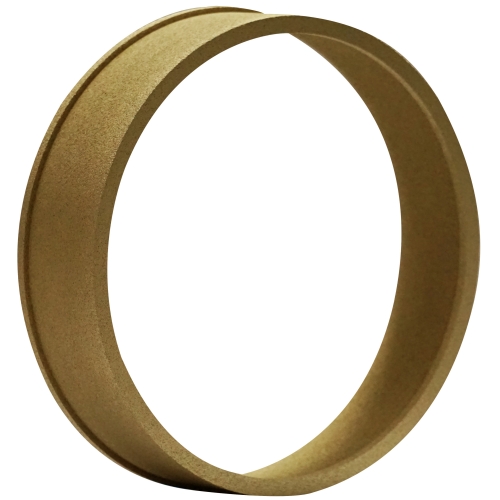
Porous TaC nplhaib
| Qhov chaw ntawm keeb kwm: | Tuam Tshoj |
| Hom Npe: | Semixlab |
| Model Number: | PTCR-001 |
| Certification: | ISO9001 |
| Yam Tsawg Tshaj: | 1 set |
| Nqe: | Tiv tauj rau Kev Hais Tus Nqi Tshwj Xeeb |
| Ntim Paub meej: | Pob khoom xa tawm txheem |
| Tus me nyuam lub sij hawm: | Lub Sij Hawm Xa Khoom: 45-50 Hnub Tom Qab Kev Pom Zoo |
| Ntsiab lus uas them: | T / T |
| Mov Muaj peev xwm: | 200 teeb tsa / Hli |
Hauj lwm
Silicon carbide (SiC), a third-generation semiconductor material, has outstanding properties such as high bandgap, high thermal conductivity, and high breakdown electric field, making it crucial in fields like new energy vehicles, rail transportation, 5G communication, and power electronics. The growth of SiC single crystals requires extremely high temperatures (>2000°C) and harsh physical and chemical environments, imposing extremely high demands on key components of the growth equipment, such as crucibles and thermal field components. Semixlab provide Porous tantalum carbide (TaC) rings, with their unique physical and chemical properties, have become an ideal material for optimizing the growth process of SiC single crystals.
Core characteristics of porous tantalum carbide rings
1. Kub kub stability
Tantalum carbide melting point up to 3880℃, in the silicon carbide single crystal growth temperature range (2000-2500℃) to maintain structural stability, avoid deformation or volatilization.
Low thermal expansion coefficient (6.3×10⁻⁶/K), reducing the risk of cracks caused by thermal stress.
2. Chemical inertness
It has strong compatibility with silicon carbide, graphite and other materials, and does not react with silicon (Si) and carbon (C) vapor at high temperature to avoid polluting crystals.Excellent corrosion resistance to silicon/carbon gases.
Nthuav Qhia:
1. Other names: Porous TaC ring,Porous Tantalum carbide,TaC coated ring
2. Application: As the core component of the thermal field system, porous TaC ring regulates the heat radiation distribution through its porous structure, reduces the radial temperature gradient, and improves the axial growth uniformity of silicon carbide single crystal.Combined with the graphite heater, the crystal stress defects caused by local overheating can be reduced.
3. Core parameters:Tantalum carbide melting point up to 3880℃, in the silicon carbide single crystal growth temperature range (2000-2500℃) to maintain structural stability, avoid deformation or volatilization.
Low thermal expansion coefficient (6.3×10⁻⁶/K), reducing the risk of cracks caused by thermal stress.
daim ntawv sau npe
The key application in the growth of silicon carbide single crystal
1. Thermal field design and temperature control
As the core component of the thermal field system, the porous TaC ring regulates the heat radiation distribution through its porous structure, reduces the radial temperature gradient, and improves the axial growth uniformity of the crystal.
Combined with the graphite heater, the crystal stress defects caused by local overheating can be reduced.
2. Gas transport and reaction optimization
In PVT growth furnace, porous TaC rings can be used as gas diffusion medium to evenly distribute Si/C vapor to seed crystal surface, which can improve crystal growth rate and crystal quality.
The pore structure can adsorb trace impurities (such as metal ions) and improve the purity of the crystal (resistivity >10⁵ Ω·cm).
3. Long life support assembly
Instead of traditional graphite materials, it is used for crucible support rings or heat insulation layers to avoid the problem of graphite powder at high temperatures and extend the service life of the equipment (>1000 hours).
The porous structure relieves thermal stress concentration and reduces the risk of cracking.

TaC ring mainly used in PVT method
In summary, Semixlab’s Porous TaC Ring improve crystal quality: uniform thermal field reduces defect density and supports the preparation of large size SiC single crystals of 6 inches and above.
Process efficiency optimization: Accelerate gas transmission efficiency and increase growth rate by 10-15%.
Reduce production costs: Long-life components reduce the frequency of equipment maintenance, and the overall cost is reduced by 20-30%.
Kev Tshaj Loj (Competitive Advantage)
Advantages of porous structure
The controllable porosity (30-60%) optimizes the gas diffusion path and promotes uniform Si/C vapor transport in PVT (physical vapor transport method).
The high specific surface area enhances the efficiency of thermal radiation, helps to form a uniform temperature field, and inhibits crystal defects (such as microtubules and dislocations).