EN
EN  EN
EN DA
DA NL
NL FI
FI FR
FR DE
DE IT
IT JA
JA KO
KO NO
NO PL
PL PT
PT RO
RO RU
RU ES
ES SV
SV TL
TL ID
ID SK
SK UK
UK VI
VI TH
TH TR
TR FA
FA BE
BE LA
LA UZ
UZ

SiC Coated Wafer Susceptor
| Qhov chaw ntawm keeb kwm: | Tuam Tshoj |
| Hom Npe: | Semixlab |
| Model Number: | SiC Coated Wafer Susceptor-01 |
| Certification: | ISO9001 |
| Yam Tsawg Tshaj: | Yuav tsum tau sib tham ua ntej |
| Nqe: | Tiv tauj rau Kev Hais Tus Nqi Tshwj Xeeb |
| Ntim Paub meej: | Pob khoom xa tawm txheem |
| Tus me nyuam lub sij hawm: | 15-30 Hnub Tom Qab Kev Pom Zoo |
| Ntsiab lus uas them: | T / T |
| Mov Muaj peev xwm: | 2000pcs / hli |
Hauj lwm
SiC Coated Wafer Susceptor is a key component used in high-temperature processes such as semiconductors, LEDs, and photovoltaics. It is mainly used to carry and heat wafers (such as Si, GaN, SiC, sapphire and other substrates) in processes such as chemical vapor deposition (CVD), metal organic chemical vapor deposition (MOCVD), and epitaxy. SiC coating provides excellent high temperature resistance, corrosion resistance, and thermal stability, and is suitable for harsh process environments.


daim ntawv thov:
SiC (Silicon Carbide) Coated Wafer Susceptor is a key component widely used in semiconductor manufacturing and high-temperature processes, mainly used to support and heat wafers.
Cov kev pabcuam uas muab tau:
kev tshuaj xyuas qhov xwm txheej ntawm cov neeg siv khoom siv, cov ntaub ntawv sib phim, kev daws teeb meem kev siv tshuab.
Cov ntaub ntawv ntawm lub tuam txhab:
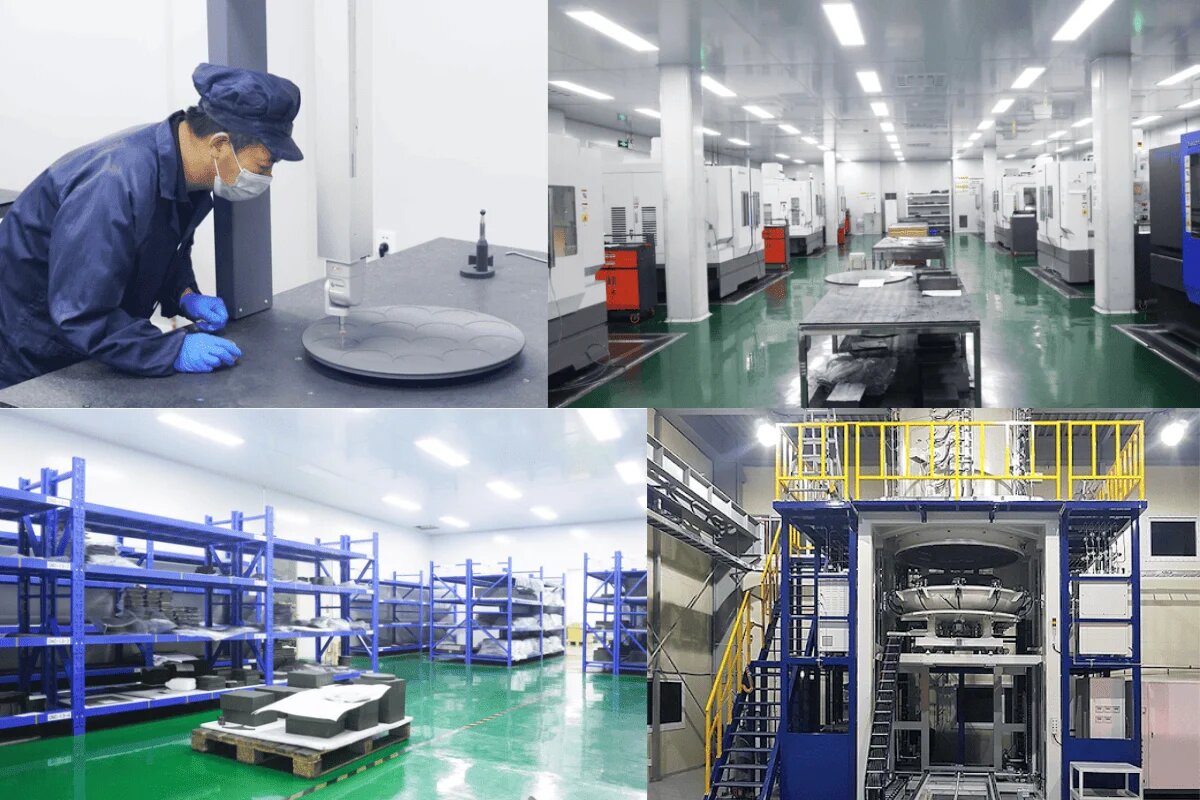
Semixlab muaj 2 lub chaw soj nstuam, ib pab neeg kws tshaj lij nrog 20 xyoo ntawm kev paub txog khoom siv, nrog R&D thiab kev tsim khoom, kev sim thiab kev txheeb xyuas.
Specifications
Kev Tsis
| project | parameter |
| Substrate | High-purity graphite material |
| Txheej khoom | Chemical vapor deposition (CVD) SiC |
| Tshaj kub hauj lwm ntau tshaj | ≤1800℃(inert/vacuum environment) |
| Hlau tsis muaj zog cov ntsiab lus | <1ppm |
| Nto saum npoo av | Ra≤0.5μm (polishing optional) |
| Tus qauv loj | Suitable for 2", 4", 6", 8" wafers(Support customized size, appearance, thickness) |
daim ntawv sau npe
Cov teb tseem ceeb ntawm daim ntawv thov
| Daim ntawv thov kev taw qhia | Yam xwm txheej |
| High temperature process | Used in high-temperature processes such as CVD (chemical vapor deposition), MOCVD (metal organic chemical vapor deposition) or epitaxial growth to carry silicon wafers or compound semiconductor (such as GaN, SiC) wafers.SiC coating can withstand high temperatures above 1000°C, preventing traditional metal materials from contaminating the process environment due to thermal expansion or volatilization. |
| Semiconductor device manufacturing | Used in the preparation of SiC power devices and third-generation semiconductors (such as GaN), and can withstand corrosive gases (such as H₂, HCl) and high temperature environments. |
| Third generation semiconductors | SiC coated carriers better match the thermal expansion coefficients of GaN/SiC wafers, reducing stress defects in epitaxial growth and improving film quality. |
| Diffusion and annealing | During the silicon wafer doping or annealing process (such as activation annealing after ion implantation), the SiC coating can withstand high temperatures above 1200°C to avoid metal contamination. |
Kev pom zoo rau kev txheeb xyuas cov saw hlau ecological
Semixlab SiC Coated Wafer Susceptor has passed international standard verification, its quality has been authoritatively recognized, and it has a number of patented technologies, achieving a SiC coating purity of more than 99.9999%.
Cov txheej txheem thov ib txwm muaj
Graphite substrate processing → Surface pretreatment → SiC coating preparation→ Post-processing → Quality inspection → Cleaning and packaging
Through cutting-edge process parameter optimization, Semixlab SiC Coated Wafer Susceptor has achieved a major technological breakthrough in high-end semiconductor epitaxial applications. This innovation has enabled progressive import substitution in the semiconductor market, offering a high-performance, cost-effective domestic solution. Our susceptors have been successfully implemented in epitaxial growth scenarios such as GaN, SiC, LED, and power devices, demonstrating exceptional thermal stability, uniformity, and longevity—key factors for high-yield epitaxial processes.
For detailed technical specifications, white papers, or sample testing arrangements, please contact our Technical Support Team to explore how Semixlab can enhance your epitaxial process efficiency.
Kev Tshaj Loj (Competitive Advantage)
Semixlab SiC Coated Wafer Susceptor core advantages
Kev ua haujlwm kub zoo heev
High temperature stability: SiC has a melting point of up to 2700℃ and can work stably for a long time in a process environment of 1000℃~1600℃ (such as CVD, MOCVD, epitaxial growth, etc.), which is much better than stainless steel or aluminum alloy carriers. Low thermal expansion coefficient, not easy to deform at high temperature, and maintain wafer positioning accuracy.
Thermal shock resistance: SiC has high thermal conductivity, can quickly and evenly dissipate heat, and reduce the risk of cracking caused by sudden temperature changes (more durable than graphite).
Excellent corrosion and pollution resistance
Resistant to corrosive gases such as HCl, H2, NH3(common in etching and epitaxial processes), preventing the carrier from being corroded and causing particle contamination. Strong anti-oxidation performance, more stable than graphite in high-temperature oxygen-containing environments (graphite requires coating protection, while SiC itself is resistant to oxidation). SiC coating can achieve a purity of more than 99.9999%(6N), preventing metal impurities (such as Fe, Ni) from contaminating the wafer, and is particularly suitable for silicon-based and wide bandgap semiconductor (GaN, SiC) manufacturing.
Excellent thermal conductivity and thermal uniformity
Fast heat conduction ensures uniform heating of the wafer (reduces uneven thickness during epitaxial growth). Suitable for rapid temperature rise and fall processes (such as RTP rapid annealing) to improve production efficiency. The thermal expansion coefficient of SiC is close to that of silicon (Si) and silicon carbide (SiC) wafers, reducing lattice defects caused by thermal stress.
Compatibility and design flexibility
SiC coatings can be deposited on substrates such as graphite, molybdenum, and carbon fiber, taking into account both lightness and high strength. Through CVD or spraying processes, complex structures of carriers (such as porous structures and embedded heating elements) can be prepared.
peb pab

Semixlab khoom khw