EN
EN  EN
EN DA
DA NL
NL FI
FI FR
FR DE
DE IT
IT JA
JA KO
KO NO
NO PL
PL PT
PT RO
RO RU
RU ES
ES SV
SV TL
TL ID
ID SK
SK UK
UK VI
VI TH
TH TR
TR FA
FA BE
BE LA
LA UZ
UZ
Natural Silica Glass
The first category involves melting natural quartz crystals or silica to produce natural quartz glass, which can be further subdivided into methods such as electric melting, gas combustion, and plasma melting based on heat sources and processes.
In the electric melting method, powdered quartz raw materials in a crucible are melted via electrical heating (including resistance heating and electromagnetic induction heating), followed by a rapid cooling vitrification process to form quartz glass14. During melting, the quartz crystal structure undergoes phase transitions from β-quartz to α-quartz, then to α-cristobalite (accompanied by the formation of an amorphous phase), until reaching approximately 1723°C, where the quartz melt begins to form.

High Purity Quartz Sand
The melting process of quartz powder is usually carried out in a high vacuum environment (0.1~10 Pa) to remove the gas released in the process and reduce the bubble content in the quartz glass. The quality of quartz glass prepared by the electric melting method mainly depends on the purity of the raw materials. Metal impurities in quartz raw materials are usually difficult to remove, so the metal impurities in fused quartz glass are generally high and difficult to control. The moisture in quartz powder can be effectively removed by drying, so quartz glass with a low hydroxyl content can be prepared by the electric melting method.
Synthetic Quartz Glass
The second category involves synthesizing quartz iav through chemical reactions using silicon-containing compounds (e.g., halosilanes, hydrosilanes, and organosilicons) as raw materials, termed synthetic quartz glass. Based on reaction principles, this category is further divided into three methods.
1) Plasma Chemical Vapor Deposition (PCVD): Silicon-containing compounds undergo thermal oxidation in an anhydrous environment to generate SiO₂.
2) Flame Hydrolysis Deposition (FHD): Silicon-containing compounds undergo hydrolysis (often accompanied by oxidation) in a hydrogen-oxygen flame.
3)Sol-Gel Method: Silicon-containing compounds undergo hydrolysis in an aqueous medium.
Among these, FHD is the most widely adopted and mature industrial technology, encompassing direct synthesis and indirect synthesis.
● Direct Synthesis: High-temperature hydrolysis produces molten SiO₂ particles, which are directly deposited onto a substrate and cooled to form quartz glass.
● Indirect Synthesis: Low-temperature hydrolysis generates soot-like SiO₂ particles, forming a porous SiO₂ body. This porous body undergoes dehydration, doping, sintering, and cooling to yield quartz glass.
In industrial applications, the commonly used direct synthesis method is Chemical Vapor Deposition (CVD). Indirect synthesis methods include modified approaches based on CVD, such as two-step CVD, Vapor-phase Axial Deposition (VAD), and Outside Vapor Deposition (OVD).
These methods differ in preparation processes and final products. For instance, CVD and two-step CVD are primarily used to produce large-sized quartz glass ingots, while VAD and OVD are mainly employed for manufacturing quartz glass optical fiber preforms. Despite these distinctions, all these techniques are fundamentally rooted in the principles of Flame Hydrolysis Deposition (FHD).
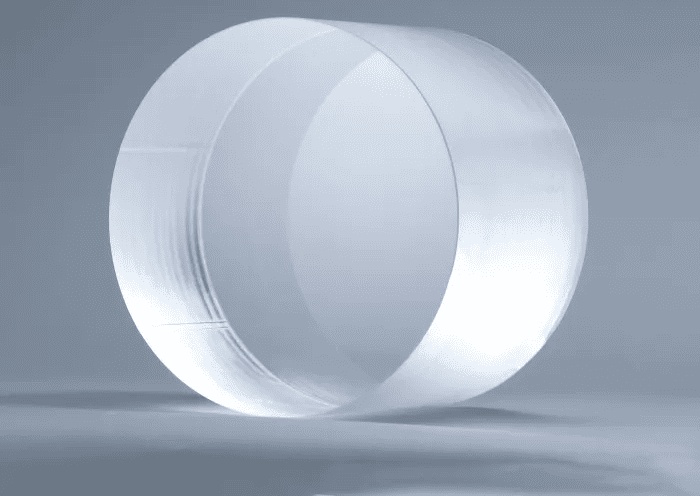
Quartz glass ingot
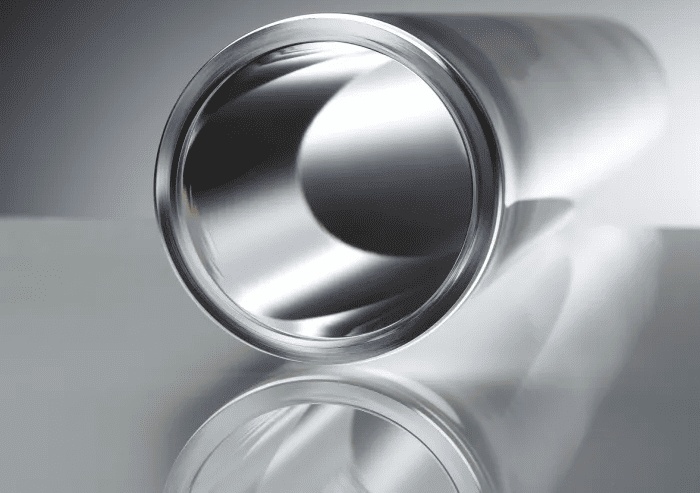
Optical Fiber Preform
Thermal Modification Method
In practical industrial applications, the shape requirements of quartz glass products are critical. For example, high-purity quartz glass tubes and quartz glass rods are widely used in the semiconductor industry. As a result, product reshaping (reforming) holds significant importance in quartz glass manufacturing. Currently, the thermal reforming method is the primary industrial approach for modifying quartz iav products. This involves heating the quartz glass to its softening point and then altering its shape according to practical needs.

Synthetic quartz glass tube
As the temperature increases, the quartz iav preform softens, allowing it to be drawn downward by a pulling device to form quartz glass rods or tubes. By adjusting the furnace temperature and drawing speed, rods or tubes with varying diameters can be produced. The coil arrangement and furnace structure of the electromagnetic induction heating furnace significantly influence the temperature distribution field within the furnace. In practical production, strict control of this temperature field is essential to ensure the quality of the quartz glass products.
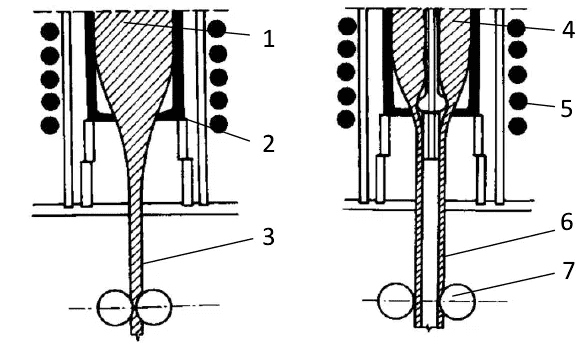
Quartz glass rods and quartz glass tubes
(Parts in the picture: 1-quartz glass mother rod; 2-heating element; 3-quartz glass rod; 4-quartz glass mother tube; 5-induction coil; 6-quartz glass tube; 7-tractor)
Table of Contents
Semixlab Technology Co., Ltd, tau tsim muaj xyoo 2018, yog ib lub tuam txhab ua lag luam siv thev naus laus zis uas tsom mus rau kev tshawb fawb thiab kev txhim kho, kev tsim khoom thiab kev muag khoom ntawm cov khoom siv siab heev. Nws yog ib lub tuam txhab tsim khoom siv semiconductor ua tus thawj coj hauv ntiaj teb.